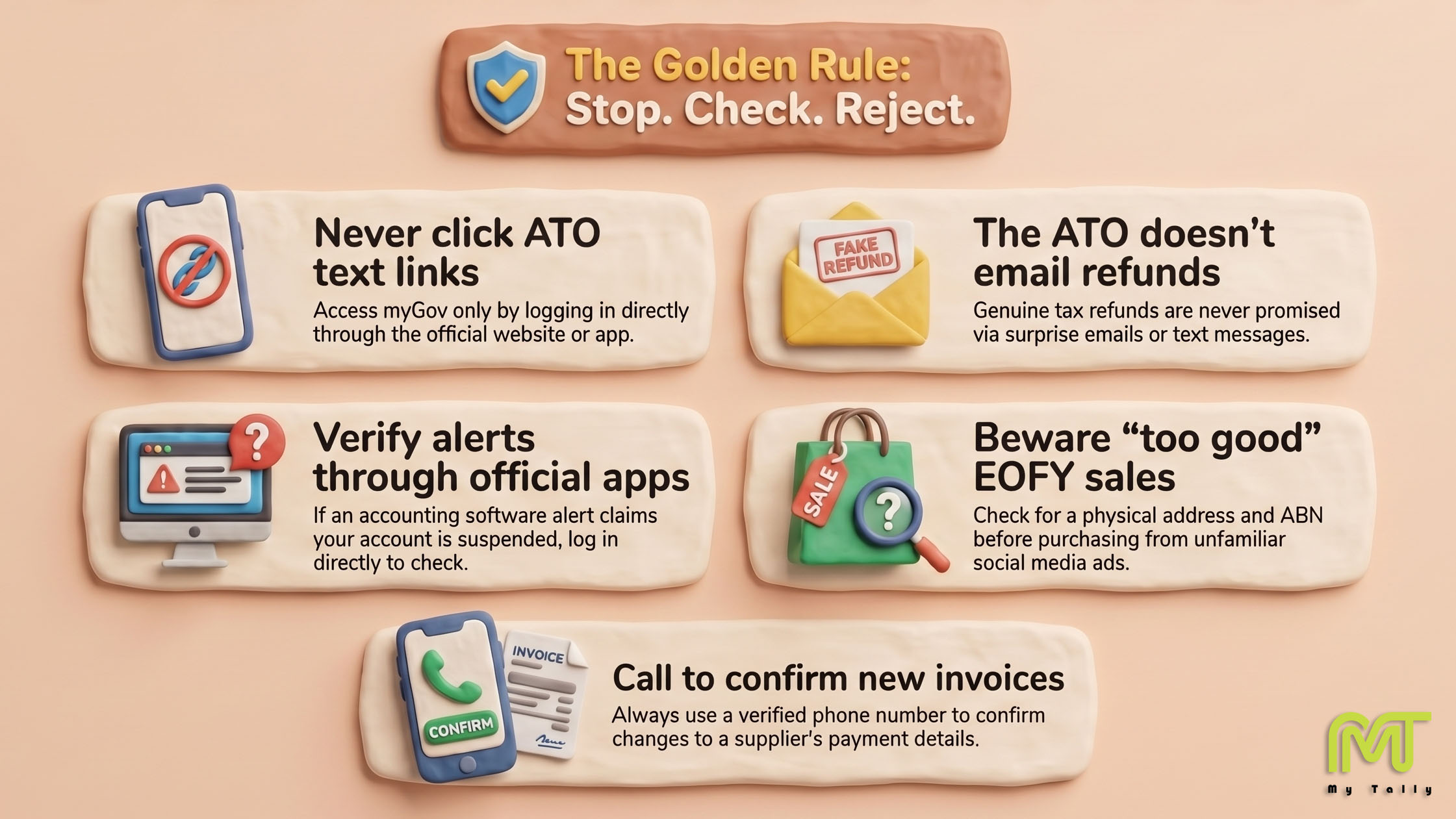
Protect Your Wallet: Learn Tax-Time Scams to Avoid
The End of Financial Year (EOFY) often brings a mountain of paperwork and plenty of stress. Unfortunately, it’s also the time of year when scammers work overtime to steal your hard-earned money and personal information.
To help you protect your finances this tax season, here are five common scams to watch out for, along with tips on how to avoid them.
1. Fake Messages from the ATO: It is incredibly common to receive text messages or emails from scammers pretending to be the Australian Taxation Office (ATO). These messages typically urge you to click a link to access your myGov inbox. Because people are actually expecting to hear from the ATO during tax time, it is easy to let your guard down and fall for this trick.
How to stay safe: Never click these links. Always check your myGov account by logging in directly through the official ATO website or app. According to Kenny Phua, senior lecturer of finance at the UTS Business School, "myGov will never make such requests" for personal documents, bank details, or your tax file number over text or email.
2. The "Surprise Refund" Trap: Everyone loves getting money back at tax time, and scammers use this to their advantage by sending enticing emails promising a surprise refund or bonus. All you have to do is click a link to confirm your details. In reality, this link leads to a fake website designed to harvest your personal and banking information. In some horrifying cases, scammers use this information to log in and change the bank details linked to your real tax return, completely redirecting your actual refund into their own pockets.
How to stay safe: Keep in mind that scams are highly personalised, but the ATO will never text or email you asking you to claim a refund or hand over personal information. When in doubt, head directly to the official ATO website.
3. Bogus Accounting Software Alerts: If you use accounting software to manage your business or personal finances, you are likely expecting reminders and updates from those platforms during EOFY. Scammers know this and send out fake alerts claiming your account has been suspended, needs verification, or requires updated payment details. The goal is to create panic so you rush to click their fraudulent link and log in, handing over your credentials in the process.
How to stay safe: If you receive an unexpected alert about your accounting software, do not click the link. Log in through the official website or app to see if the notification is genuine.
4. Too-Good-To-Be-True EOFY Sales: Who doesn't love a good EOFY sale? Unfortunately, there has been a spike in fake online stores popping up to take advantage of bargain hunters. Scammers design convincing websites selling fashion, beauty, and electronics, and promote them heavily through social media ads.
Take the real-life example of a shopper named Helen, who saw a social media ad for a beautiful dress at a 50% discount. The ad looked like any other legitimate fashion brand, so she handed over her card details. The dress never arrived, and her follow-up emails were ignored.
How to stay safe: If a price seems too good to be true, it is a major red flag. Before buying from a new brand, look up their Australian Business Number (ABN), see if they have a physical address or phone number, and search online to see if the brand has a history of scams.
5. Fraudulent Invoices: If you are a sole trader or run a business, be on high alert for fake invoices or emails from "clients" asking you to update their payment details. These scams can be incredibly convincing and often look exactly like an email from a supplier you regularly work with. When you are rushing to finalise your EOFY books, it is easy to accidentally click a bad link or send money to a fraudulent account.
How to stay safe: If a supplier asks you to update their bank details, or if you receive an invoice you weren't expecting, pick up the phone. Call them on a verified number—not the one written on the suspicious invoice—to confirm the request.
The Golden Rule: Stop. Check. Reject. To better protect yourself during EOFY, simply slow down. Always confirm the legitimacy of texts and emails via official channels before you take any action, and immediately delete and block anything that seems suspicious.